
Learning Systems
How to Estimate Task Duration from Comparable Work
Look at how long similar tasks took, explain what makes the new one different, and decide when to update your estimate.
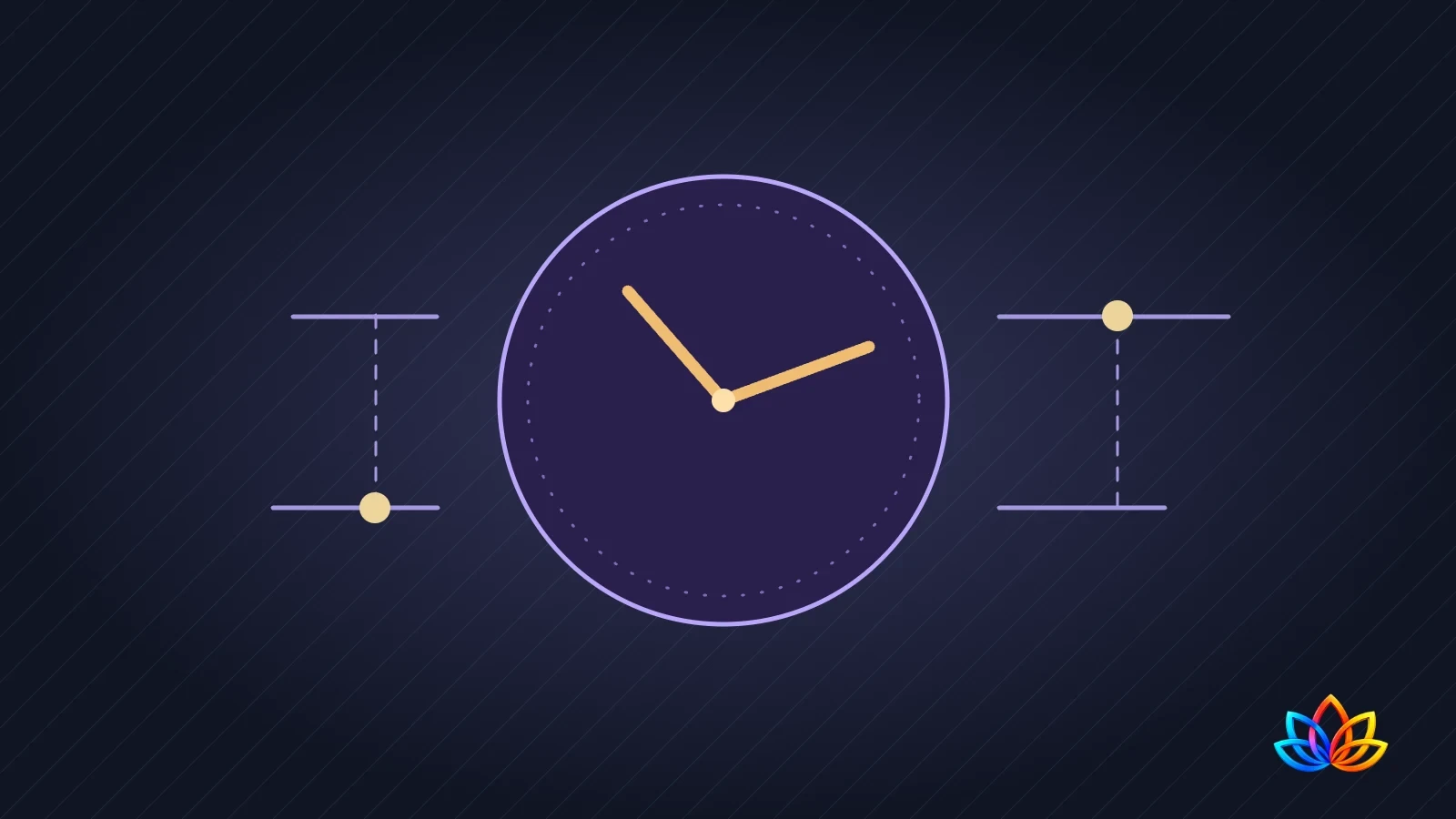
A familiar assignment has three straightforward steps. Each looks short, so tomorrow seems like a reasonable finish. Before promising a date, find out when a comparable job was actually accepted. You may have done only a few hours of work and spent much longer waiting for input or a review.
The aim is to explain where the estimate comes from and what would make the task finish sooner or later. One number on its own cannot show either.
Compare your plan with completed jobs
A step-by-step plan shows what you intend to do. A record of completed work shows what happened, including waiting, revisions, and changes to the request. Use both views. The plan helps you identify unfamiliar work. The record helps you see recurring steps that your plan left out.
In research by Buehler, Griffin, and Ross, participants were optimistic about completion times for several kinds of tasks. In their fourth study, asking participants to connect relevant past experience to the new estimate eliminated optimistic bias in that group, but did not reduce absolute prediction error [1]. The finding gives you a reason to make previous cases visible in your explanation. It does not provide a guaranteed finish date.
Define your start and finish before counting
Write down when timing begins and what counts as done. For a short training resource, you might start when all the material is available and finish when the revised version is accepted after the agreed review. Comparing time to a first draft with time to final acceptance gives you a weak basis for a prediction.
Record elapsed time from start to acceptance for each past job. If you have the records, add active working time separately. Preserve the units. Three hours of hands-on work are different from three working days that include waiting. UK Treasury guidance for project appraisal recommends using past or similar projects and adjusting for the current project's circumstances [2]. Apply that principle to a small task without importing the guide's project-specific percentages.
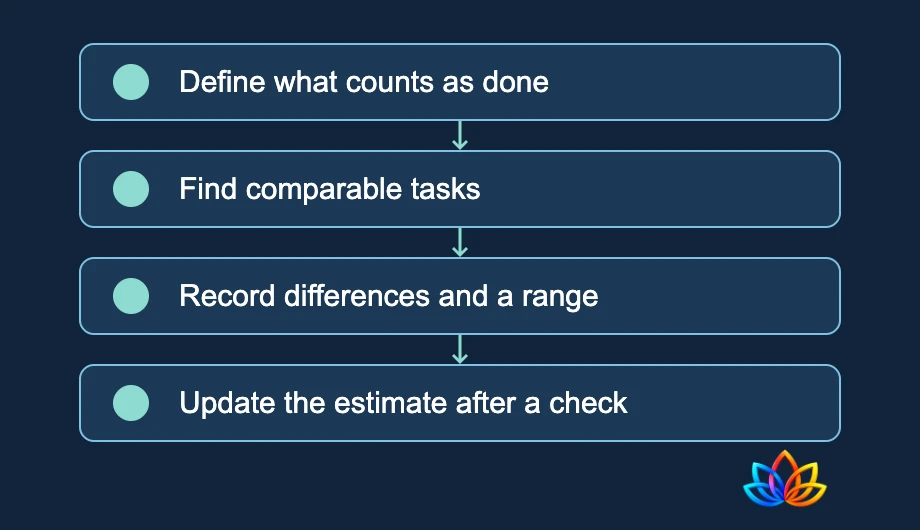
- Define what counts as done
- Find comparable tasks
- Record differences and a range
- Update the estimate after a check
Match the factors that can change the finish date
A similar task title is only a starting point. Check the steps that depend on other people, how complete the input was, and how many review rounds counted toward completion. A page of text ready for review is a different assignment from a page that still needs research.
For study, compare exercises that require similar prior knowledge and the same kind of deliverable. At work, separate jobs you finished alone from ones that depended on approval. If no case is comparable, say so and label the estimate provisional. The first completed attempt can then inform your next estimate.
Illustrative example: a training checklist
Suppose three comparable checklists took 3, 4, and 6 working days from receiving complete materials to final acceptance. The values are already sorted, so the middle observation is 4. That is the median of this small set. Check the notes before drawing conclusions about why the longest case differed.
Imagine that artwork was ready for the shortest case and a reviewer was unavailable for part of the longest. Artwork for the new request has yet to arrive, but the team has agreed on a single review round. A planning range of 4–6 working days could be reasonable if the materials arrive before work begins and the review stays within its agreed scope. This is an illustrative judgment about those differences, rather than a statistical interval or a promise.
Say what changed when the estimate changes
Keep a slow case in view even if it complicates a promised date. Correct mistakes in the data. If the delay was real, consider whether the same cause might recur and show it as a risk or a separate scenario. Check the fastest completion in the same way. Some of the work may already have been done.
Say who will use the estimate. Someone allocating their own time may need expected active work. Someone waiting for the result needs to know when they can use it. Keep the original estimate if you revise it after learning something new. You can then tell an initial forecasting error from a genuine change in requirements or circumstances.
Exercise: compare one estimate with its outcome
Choose a small recurring job. Write down its start and finish, the comparable cases, and a range with one condition that will trigger a review. You might plan to revisit it when you know whether the material is complete or when a reviewer is available. A range without a review trigger can outlast the assumptions behind it.
After finishing the job, record its actual duration using the same boundaries. If the result is outside the range, first check the conditions and any waiting time. Write one practical change for the next estimate, such as “Record material preparation separately from processing.” Treat one new observation as evidence to add rather than a pattern by itself.
Frequently asked questions
How much history do I need?
Use the comparable cases available for a small decision and state how many there are. Be cautious about generalizing from a small record.
Should I start with the mean?
Look at the individual times, median, and range. Your choice depends on what the estimate needs to describe.
What if I have no history?
Give a provisional estimate and explain the assumptions. Save the timing data from the first completed attempt.
Does waiting count?
Count it in elapsed time if it falls between the stated start and finish. Track active work separately.
Is a range a commitment?
A range is a forecast with conditions. A deadline commitment calls for a separate decision about risk and obligations.
When should I update the estimate?
When an assumption affecting completion is confirmed or changes, such as input, scope, or review availability.
Conclusion
Before the next commitment, find a comparable completed job and check what its timing actually measured. Then write down your range, the reason for any adjustment, and when you will review it.
See how to calculate the median
Sources
About Meta Life Vision
Meta Life Vision is an educational brand within Yevt Group. YEVT DIGITAL works on the Meta Life Vision website and provides website development and other digital solutions.